The first idea is a starting point
Children often expect a successful artwork to appear correctly on the first try. That expectation can make an erased line or changed color feel like failure. Artists work differently: they test compositions, make studies, adjust proportions, cover passages, and sometimes begin again. Teaching that process gives students a practical response to perfectionism.
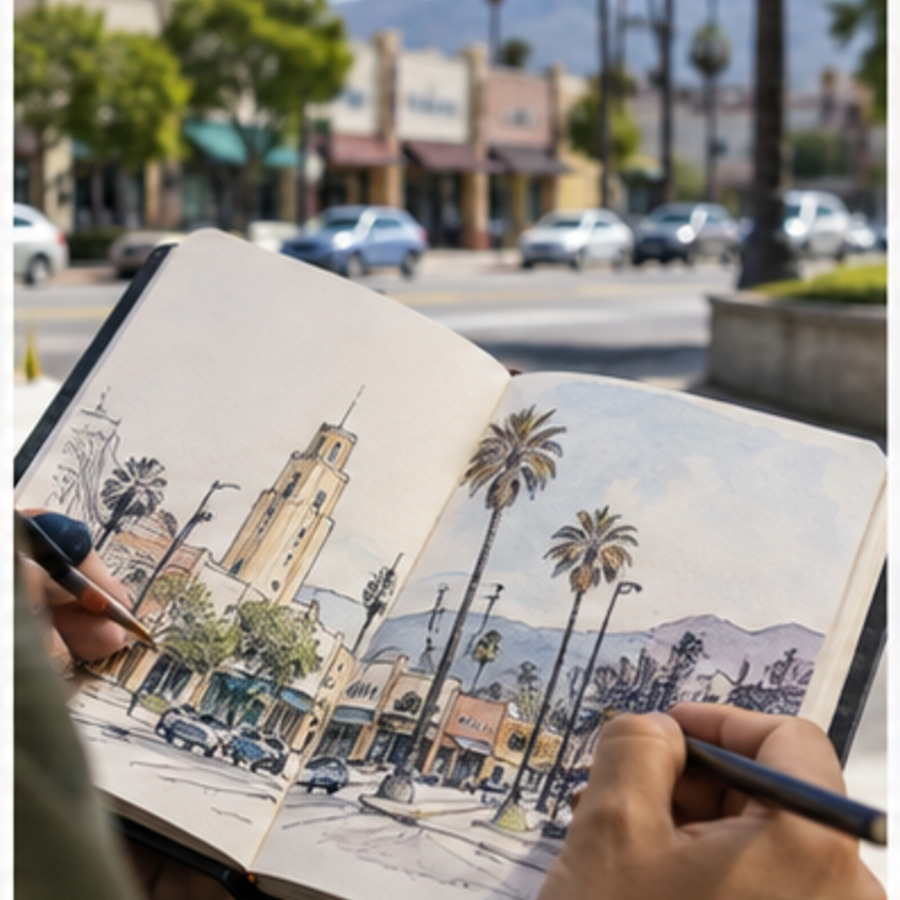
A preliminary sketch lets a young artist solve large questions before expensive materials or strong colors make changes harder. Where will the focal point sit? What is the largest shape? Is there enough empty space? Two or three thumbnail sketches can reveal possibilities that were invisible in the first idea.
Revision begins with looking
Before changing a piece, students need to understand what they see. A useful studio pause can be simple: place the work upright, step back, and identify one area that communicates clearly and one area that needs attention. Turning the image upside down can make balance and value easier to notice because the subject temporarily becomes a group of shapes.
The goal is not to find everything “wrong.” It is to connect each change to an intention. If the artist wants the face to attract attention, perhaps the surrounding contrast should be quieter. If a landscape feels flat, overlapping shapes or a shift in color temperature may create depth.
Keep evidence of the process
Photographing a painting at several stages helps children see how much thinking happens between the blank surface and the final piece. Save color tests, compositional sketches, and notes. These materials are valuable in a portfolio because they show how the student develops an idea.
Parents can support this by asking about choices rather than speed. “What did you decide today?” recognizes progress even when the work is not finished. Some of the most important class sessions produce no completed object at all; they produce a solution that makes the next stage possible.
Knowing when to stop
Revision also includes deciding that a piece is complete. Students can return to their original intention and ask whether the image now says enough. Not every area needs equal detail, and more paint does not always mean more clarity. Learning to stop with purpose is part of becoming an independent artist.
← Back to all art resources